By Sasha Alex Lessin, Ph.D. (Anthropology, UCLA)
Overview
Hugo Chávez entered office in 1999 after voters elected him to overturn the old party system. Chávez, driven, as most rulers are, by the ancient Anunnaki mindset to dominate, stormed into office and forced through a new constitution. He renamed the country the Bolivarian Republic of Venezuela and promised power to the poor.
The ancient Anunnaki mindset drove Chávez to dominate the country. He launched a rapid political transformation and pushed a new constitution that expanded presidential authority, renamed the nation the Bolivarian Republic of Venezuela, and promised direct participation for the poor. He reorganized the state, replaced senior military commanders, and confronted the traditional business and media elites.
In 2002, opponents and dissident officers attempted a coup and briefly removed him from power, but mass mobilizations in the barrios and loyal army units restored him within forty-eight hours. The clash-hardened divisions and an extended oil-industry strike later that year damaged the economy and deepened polarization. But after surviving a 2004 recall referendum, Chávez consolidated control over the national oil company and directed rising petroleum income into social missions that expanded literacy, health clinics, subsidized food, and housing. High oil prices in the mid-2000s funded these programs, enabling him to build a regional alliance, ALBA, to challenge U.S. influence and promote his model of “twenty-first-century socialism.”
He won repeated elections, centralized decision-making, limited hostile media outlets, and increased state regulation of key industries.
Poverty rates fell, and political participation grew, yet dependence on oil revenue increased, and private investment declined. Shortages, inflation, and crime created new tensions even as supporters celebrated new schools and clinics.
In 2012, he won another term while battling cancer. In March 2013, Chávez died, leaving a loyal movement, a powerful presidency, and a country intensely divided over the legacy of the Bolivarian Revolution.
“I hope this man remembers us after the speeches end,” a fruit seller in Caracas murmured.
Chávez replaced senior generals, attacked the old elites, and blasted the private media. He called for participatory democracy and a rebirth of national dignity. Supporters packed the plazas. Opponents shuddered.
A young indigenous activist from Amazonas thought, Maybe now they will finally hear our voices.
CHÁVEZ’S CONSTITUTION CREATED AN OIL-FINANCED WELFARE STATE
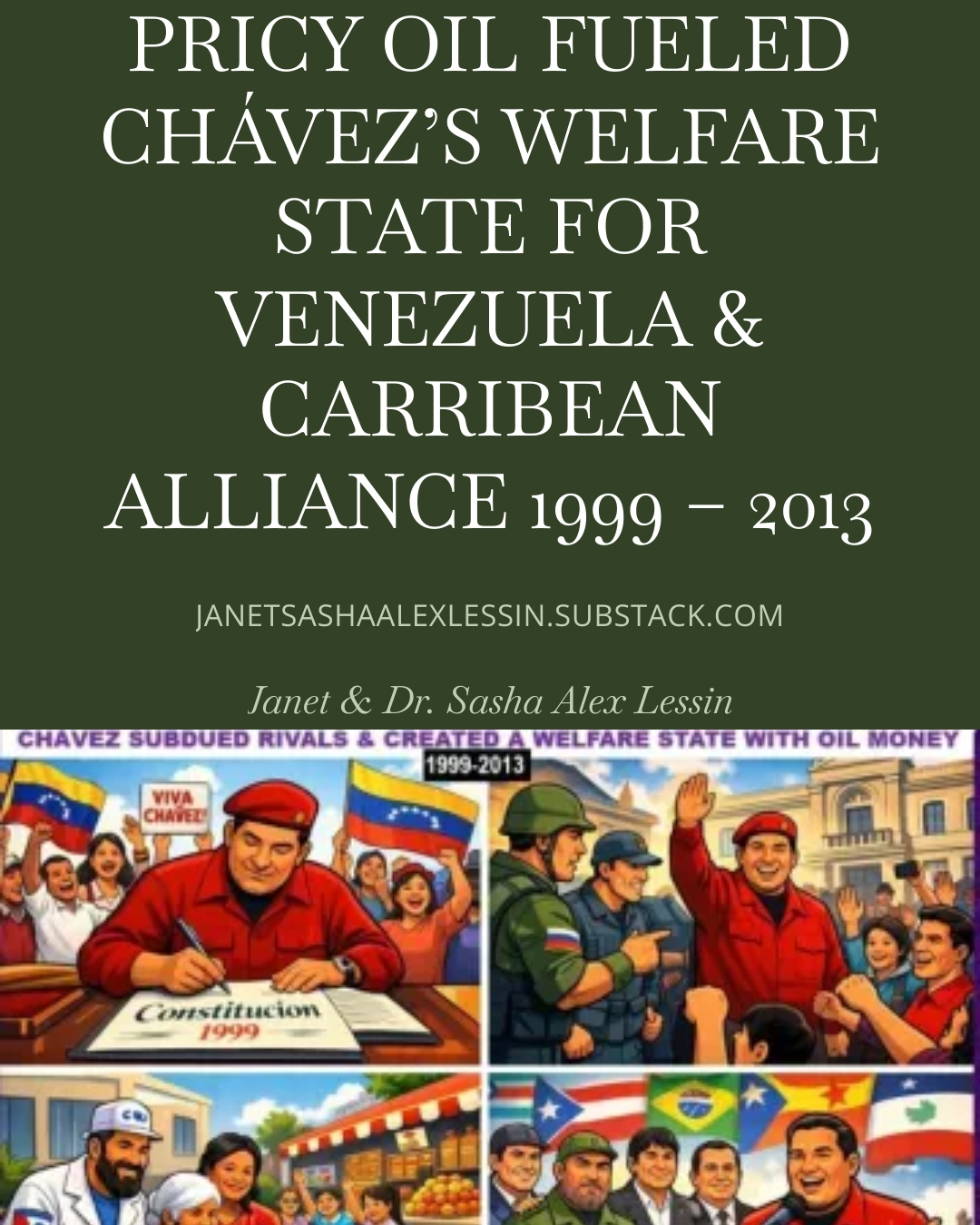
Immediately after his inauguration, February 2, 1999, as President, he said he had a new constitution for Venezuela, one that would replace the 1961 constitution, arguing it represented the old elite “Punto Fijo” political system. On April 25, 1999, Venezuelans voted in a national referendum to authorize a Constituent Assembly to draft a completely new constitution. In July 1999, he held elections for a Constituent Assembly. His supporters won an overwhelming majority of the seats, giving him effective control over the drafting process. On December 15, 1999, in a national referendum, 71 percent of voters approved the new Constitution, and on December 20, Chávez formally proclaimed it. The new document officially became the country’s Constitution and was renamed the Bolivarian Republic of Venezuela, replacing the 1961 charter. The new Constitution became the legal foundation of what Chávez called the “Bolivarian Revolution.”

CONSERVATIVE COUNTERREVOLUTIONARIES JAILED CHÁVEZ, WHOSE SOLDIERS AND SUPPORTERS FREED HIM IN TWO DAYS
In April 2002 conflict exploded. Business leaders, opposition politicians, and dissident officers organized marches against the government. Chaos shook Caracas. Gunfire rattled near Miraflores Palace. Military commanders removed Chávez and flew him to an island prison.
“He is gone for good,” a wealthy critic declared.
But the barrios erupted. Loyal officers rebelled. Tens of thousands surged toward the palace. Within forty-eight hours, Chávez returned in triumph.

“They tried to steal our future,” a grandmother shouted, “and we took it back!”
The clash hardened the nation. Later that year, managers at the state oil company launched a crippling strike. Fuel vanished. Production collapsed. Families waited in endless lines.
A tired taxi driver muttered, “The powerful fight and ordinary people suffer.”
CHÁVEZ MADE VENEZUELA INTO A WELFARE STATE ON MONEY FROM HIGH OIL PRICES
After the 2004 recall referendum, Chávez tightened his grip. He purged opponents from the oil company and poured petroleum income into social missions. New clinics opened in poor neighborhoods. Literacy brigades taught adults to read. Subsidized markets sold cheap food.

“For the first time, a doctor treats my children,” a mother said with relief.
Cuban advisors arrived to staff health programs and train administrators.
One Cuban doctor whispered to another, “We heal the people, yes, but politics stands beside every stethoscope.”
High oil prices funded housing projects, scholarships, and pensions. Poverty statistics dropped. Rallies overflowed with red-shirted supporters.
Yet a union organizer worried, All this depends on oil money. What happens when the price falls?
CHÁVEZ & CUBA’S FIDEL CASTRO CREATED THE ALBA ALLIANCE WITH BOLIVIA, NICARAGUA, EQUADOR & CARIBBEAN NATIONS
Chávez looked beyond Venezuela and built a new geopolitical bloc. In 2004, he and Fidel Castro created the ALBA alliance as an alternative to U.S.-led trade systems. Bolivia joined in 2006. Nicaragua entered in 2007. Ecuador followed in 2009.
Then came the Caribbean partners, each drawn by promises of solidarity and discounted oil: Dominica (2008), Antigua and Barbuda (2009), Saint Vincent and the Grenadines (2009), Grenada (2014), Saint Kitts and Nevis (2014), and Saint Lucia (2021).
“We no longer kneel to Washington,” Chávez declared.
An Afro-Caribbean fisherman in Dominica reflected, “Cheap fuel keeps our boats moving. For us, that matters more than ideology.”
In indigenous regions, some welcomed the defiant tone.
“At least he says our names out loud,” a Wayuu elder observed.
Critics saw another face.
“He talks of unity, but he commands like a general,” a student complained.
CHÁVEZ CENTRALIZED AUTHORITY IN VENEZUELA
Election after election strengthened Chávez. He regulated hostile media, expanded presidential authority, and filled institutions with loyalists. Private investment shrank. Shortages and inflation crept upward.
A shopkeeper sighed, “People ask for milk, and I have empty shelves.”
Crime climbed in the cities. Bureaucracy swelled. Corruption rumors multiplied.
A descendant of slaves in Barlovento muttered, “The old elites stole from us. Now new elites steal in the name of the poor.”
A tired taxi driver muttered, “The powerful fight and ordinary people suffer.”
CHÁVEZ & CUBA’S FIDEL CASTRO CREATED THE ALBA ALLIANCE WITH BOLIVIA, NICARAGUA, EQUADOR & CARIBBEAN NATIONS

Chávez looked beyond Venezuela and built a new geopolitical bloc. In 2004, he and Fidel Castro created the ALBA alliance as an alternative to U.S.-led trade systems. Bolivia joined in 2006. Nicaragua entered in 2007. Ecuador followed in 2009.
An Afro-Caribbean fisherman in Dominica reflected, “Cheap fuel keeps our boats moving. For us, that matters more than ideology.”
In indigenous regions, some welcomed the defiant tone.
“At least he says our names out loud,” a Wayuu elder observed.
Critics saw another face. “He talks of unity, but he commands like a general,” a student complained.

CANCER KILLED CHÁVEZ, BUT VENEZUELANS LAUDED HIS LEGACY
In 2012, Chávez campaigned despite cancer. Massive crowds cheered his final rallies. He won again and named Nicolás MADURO his successor.
“Without him, who protects us?” an elderly supporter wondered.
Treatment in Cuba failed. In March 2013, Chávez died. Supporters wept in the streets.

Opponents got ready to resist Maduro.
A nurse in Caracas reflected, He gave us clinics and hope, but he left a country divided and dependent.
The Chávez era transformed Venezuela. Social programs lifted millions out of extreme poverty and brought the excluded into politics. At the same time centralized power, economic dependence on oil, and fierce polarization weakened institutions.
A thoughtful woman from the Andes concluded, “He spoke of partnership, but practiced command.”
The Bolivarian Revolution closed its first chapter with achievements, contradictions, and unresolved struggles.
SUGGESTED VIDEOS
-
“The Chávez Years” – Al Jazeera English
Balanced overview of rise to power, 2002 coup, and social programs. -
“Inside Venezuela’s Social Missions” – TeleSUR English
On-the-ground look at clinics, literacy drives, and Cuban cooperation. -
“Venezuela: Oil and Power” – PBS Frontline
Explains oil dependence and political polarization.
#HugoChavez #BolivarianRevolution #VenezuelaPolitics #2002Coup #OilStrike #SocialMissions #CubanAdvisors #ALBAAlliance #CaribbeanSolidarity #Dominica #AntiguaAndBarbuda #SaintVincentAndTheGrenadines #Grenada #SaintKittsAndNevis #SaintLucia #PetroState #LatinAmerica #NicolasMaduro #SashaAlexLessinPhD