

By Sasha Alex Lessin, Ph.D., Anthropology, UCLA

200 BCE – 1500 CE: GRAN COCLÉ INDIANS, THOUGH STILL ENTHRALLED WITH ANUNNAKI DOMINATION CONSCIOUSNESS INHABITED PANAMA

At El Caño Archaeological Park (above), excavations led by Dr. Julia Mayo have revealed elite necropolises dating back nearly 300 years. Paramount chiefs were buried face down, accompanied by sacrificed retainers — sometimes over thirty individuals.
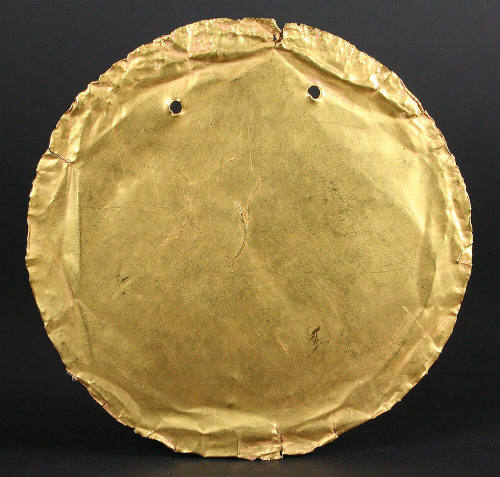
Among the El Caño, political and spiritual authority fused. An El Caño chief was ruler, shaman, and intercessor between worlds. Adorned in gold regalia made of tumbaga (a gold–copper alloy), symbolizing sacred authority, he interceded for his people among spiritual entities representing natural processes on which the El Caño depended: the bat, crocodile, shark, fish, and butterfly as well as hybrid humanoid and animal hybrids.

Bat: Night navigator. Cave-dweller. Underworld guide.

Crocodile: Amphibious threshold creature. Boundary guardian.

Other figures in gold

1500s–1700s: THE SPANISH USED GRAN COCLÉ INDIANS TO MINE SILVER & GOLD FOR IT’S COMPETITION WITH ENGLAND

Everything changed when Spain recognized the isthmus as a chokepoint. Silver from Peru crossed Panama en route to Spain. Panama became an imperial artery in which Spain subordinated the Gran Coclé regional polities, reorganized the Indians as laborers in their colony, stockpiled treasures, mined gold and silver they forced the Indians to gather, and fortified the transit routes for their gold and silver exports.
Panama’s Spanish masters organizedGran Coclé natives and African slaves to extract silver and gold and prepare it for shipment to Spain. Their labor structure was the Encomienda System.
THE ENCOMIENDA SYSTEM


Repartimiento & Forced Draft Labor
When Indigenous populations collapsed under disease and overwork, Spain shifted toward repartimiento (rotational forced labor drafts). Men were required to serve for set periods in mines or transport, receive nominal wages, and return to villages (often weakened or dead). Because Panama’s Indigenous population declined so rapidly, colonists increasingly imported enslaved Africans by the mid-1500s.
Indigenous groups such as the Guna (Kuna), Ngäbe, and others fled into the interior highlands and jungle zones, formed alliances with English privateers, engaged in guerrilla resistance, and practiced cultural concealment of their religious traditions. Some Native groups remained semi-independent for centuries.
THE CATHOLIC CHURCH IN PANAMA

Above, we see ruins of the Cathedral Tower (Torre de la Catedral) in Panamá Viejo among the remains of the original Panama City that English Pirate Henry Morgan destroyed in 1671. After the attack and subsequent fire, the Spanish abandoned this site and rebuilt the city several miles away (today’s Casco Viejo district).

Early contact between Spanish missionaries and Indigenous people in Panama

SPANISH BOSSES IN PANAMA DISSED NATIVE CHIEFS AND SHAMANS
Spain’s administrators and clergy in Panama labeled Indigenous spiritual leaders as sorcerers, idolaters, and “servants of the devil.” The Spaniards publicly humiliated, flogged, forced shamans to watch the destruction of their ritual paraphernailia and sometimes executed them. If Native Chiefs (caciques) obeyed the Spanish Administrators, they were kept as straw bosses and tribute collectors for the Gran Coclés; if not, the Admins replaced them with synchophantic Indians.
INDIGENOUS ADAPTATION STRATEGIES
Indigenous peoples were not passive; their survival strategies included outward conversion that hid inward continuity, syncretism (saints mapped onto older spirits), migration into inaccessible regions, strategic cooperation to protect communities, and revolts (some small-scale, some regionally significant). The Guna people of Panama preserved their autonomy longer than many other Indian rebel groups.
Contemporary Comments (Voices from the Period)
Some missionaries believed that Indigenous people were rational beings capable of salvation and should not be enslaved. Dominican friar Bartolomé de las Casas condemned abuses in Spanish America, arguing that Indigenous people were unjustly treated.
Colonial governors complained about labor shortages, flight of Indigenous communities, and English and French incursions. They often framed coercion as economic necessity.
Indigenous Testimony
Archaeological continuity and later oral traditions confirm Indians’ memories of forced labor, the local sacred site locales which they hid from the Spanish, and even concealed their distrust of Spanish authority.
English pirates noticed, and in 1671, Henry Morgan (Welsh by birth, English by allegiance, and a key instrument of English expansion in the Caribbean) led 1,500 men across the Isthmus of Panama and attacked Panama City (then called Panamá Viejo [old Panama]). Spanish officials saw the attack coming and removed much of the royal silver and gold in advance. They shipped treasure out by sea and hid or evacuated movable wealth. Nonetheless, Morgan did seize the city’s private merchant wealth, Church valuables, household gold and silver, slaves, and trade goods. Panama City burned (maybe accidentally or perhaps deliberately), and much Spanish wealth was destroyed in the fire. Ironically, Morgan raided Panama just as England and Spain had signed the Treaty of Madrid, which was supposed to reduce hostilities.
Spanish officials said the booty from Morgan’s raid was far less than Morgan’s men expected. Many of his officers later claimed that he had secretly withheld part of the treasure, underreported the total haul, and fled Panama before distributing shares fairly. Resentment spread among his men. Morgan had captured Panama City, but not Spain’s main treasury reserves in Panama. He took substantial loot — just not the grand royal silver convoy he hoped for.
Spain protested. Morgan was arrested and sent to England, but instead of punishment, he was knighted and later became Lieutenant Governor of Jamaica.
Panama became a Spanish-held colony that England challenged as part of its rivalry with Spain. Spain made Panama’s silver and gold strategic assets in the Spanish-English contest.


INDEPENDENCE WITHOUT FULL SOVEREIGNTY (1800s)


Over the century it passed through New Granada, Granadine Confederation, and the United States of Colombia
In 1846, the Mallarino–Bidlack Treaty granted the U.S. transit rights and the authority to intervene militarily.
In 1855, the Panama Railroad crossed the isthmus.
In 1856, the Watermelon Riot exposed tensions over foreign dominance.
The corridor was internationalized.
Panama governed itself politically — but not strategically.
THE CANAL ERA: THE PEAK OF CORRIDOR POWER (1903–1999)


The Panama Canal (1904–1914) was an engineering triumph — and a geopolitical fulcrum.
The Canal Zone was under United States governance.
In 1964, sovereignty protests erupted (Martyrs’ Day).
In 1977, Omar Torrijos and Jimmy Carter signed treaties returning the canal to Panama by December 31, 1999.
2000–2026: MODERN PANAMA: THE CORRIDOR MANAGED FROM WITHIN


Panama now operates one of the world’s most critical trade arteries. The U.S. completed the expansion of the Canal in 2016; Panama expanded its banking and logistic sectors and faced rising demands from Panama’s citizens.
Recently, American dictator Trump, however, said that he plans to retake American control of the Panama Canal.
The ancient question remains: Will corridor wealth distribute broadly? Or concentrate among elites?
Delve into the rich history of Panama. The Chibchan, Chocó, and Cueva languages were widely spoken by the people who settled in Panama before Europeans arrived. The size of the pre-Columbian Indigenous population is not known with certainty, but estimates suggest it could have reached up to 2 million individuals. These communities grew corn, squash, and root crops; they fished, hunted, and harvested edible plants and fruits. Their wattle-and-daub homes had thatched roofs of palm leaves.
Pre-contact & early societies
- Before the 1500s — Diverse communities across the isthmus; regional trade; farming, fishing, and river/coast lifeways (your CC mentions Chibchan/Chocó/Cueva language groups — we’ll later verify each region-by-region with academic sources).
Spanish entry & colonial pivot
- 1501 — Rodrigo de Bastidas sails along the Darién coast, an early Spanish claim-marking voyage.
- 1510 — Santa María la Antigua del Darién was founded; it is often described as the first permanent European settlement in mainland North America.
- 1519 — Panama City was founded on the Pacific side (your CC frames this as relocation/shift in settlement focus; we’ll pin the exact phrasing as we bring in Panama City founding sources next).
- 1500s–1700s — Isthmus becomes an imperial corridor: extraction, forced labor, and transit wealth concentrating around ports and routes. The Independence era & repeated constitutional reshuffles
1819 — Independence movements succeed in the region; Panama becomes tied to the New Granada / Gran Colombia political projects (your CC story matches the broad arc; we’ll anchor with dedicated independence sources next).
1831 / 1840–1841 — Local independence assertions and re-attachments to New Granada appear in cycles.
Santa María la Antigua del Darién, the first permanent European settlement on the American continent, was established in 1510 near the mouth of the Darién River on the Atlantic coast. The site was chosen by Vasco Núñez de Balboa and Martín Fernández de Enciso. After being abandoned in 1519, the settlement relocated to Nuestra Señora de la Asunción de Panamá, now Panama City, the first European settlement on the Pacific coast.
Thirty years after the abolition of slavery in 1852, the isthmus approved jury trials for criminal cases, and slavery was formally declared abolished and enforced.
Pre-Columbian History
Projectile points from Paleo-Indians are among the oldest artifacts found in Panama. Later, the Monagrillo culture, dating from approximately 2500 to 1700 BCE, was located in central Panama and produced some of the earliest ceramics in the Americas. These societies developed into sizable populations known especially for remarkable burials at the Monagrillo archaeological site (c. 500–900 CE) and for the Gran Coclé style of polychrome pottery.
Additional evidence of ancient Isthmian cultures can be found in the large monolithic sculptures at the Barriles site. Archaeological discoveries and early European accounts describe numerous native communities that displayed cultural diversity and participated in regional trade networks.
The Indigenous population practiced subsistence farming, growing root crops, corn, cacao, and various edible plants and fruits. Hammocks were draped between the inner walls of small palm-leaf homes supported by rounded branch frameworks. Evidence suggests that coconuts were introduced to the Panamanian Pacific coast from the Philippines during pre-Columbian times.
Spanish Colonial Period
The first European to explore the Isthmus of Panama along its eastern shore was Rodrigo de Bastidas in 1501. A year later, Christopher Columbus set out on his fourth voyage, exploring Bocas del Toro, Veraguas, the Chagres River, and the coast along Central America. Spanish explorers soon referred to the region as Tierra Firme, the name given to the Isthmus during colonial times.
Independence and Union with New Granada
New Granada gained independence from Spain in 1819. Panama considered joining federations forming in the region, possibly aligning with Peru or Central America. Ultimately, it joined Simón Bolívar’s Gran Colombia.
In 1831, the isthmus reaffirmed its independence under General José Domingo Espinar during the separation of Venezuela and Ecuador. Colonel Tomás de Herrera later opposed Espinar’s administration, leading to Espinar’s defeat and execution and the restoration of relations with New Granada.
In November 1840, a civil war over religious disputes led the isthmus, under General Tomás de Herrera, to proclaim independence again.
In March 1841, the state adopted the name Estado Libre del Istmo (Free State of the Isthmus). It drafted a constitution allowing it to rejoin New Granada as a federal district while developing external political and commercial relations. After 13 months of independence, Panama was readmitted to the union on December 31, 1841.
The United States’ participation in the 1846 Mallarino–Bidlack Treaty ultimately contributed to the formation of the United States of Colombia (1863–1886) and, later, the Republic of Colombia (from 1886).
U.S. transit power grew
- 1846 — Mallarino–Bidlack Treaty: U.S. transit rights + neutrality guarantee.
- 1855 — Panama Railroad completed sea-to-sea.
- Apr 15, 1856 — Watermelon Riot (Panama City): transit tension erupts into deadly violence.
- 1851–1852 — Abolition of slavery in New Granada (declared 1851, effective 1852).
Railroads, Canal Dreams, and U.S. Influence
The idea of building railroads or canals across Central America to expedite transoceanic travel captured the interest of North Americans and the French in the 1840s. Two decades after the Monroe Doctrine declared U.S. intentions to dominate European influence in the Western Hemisphere, New Granada’s hold on the isthmus appeared increasingly fragile.
U.S. transit power grew
- 1846 — Mallarino–Bidlack Treaty: U.S. transit rights + neutrality guarantee. Under the 1846 treaty, the United States gained the right of passage across the isthmus and the authority to intervene militarily to preserve neutrality and sovereignty. The Panama Railroad, completed in 1855, became the first transcontinental railroad, connecting Aspinwall (Colón) and Panama City.
- 1855 — Panama Railroad completed sea-to-sea.
- Apr 15, 1856 — Watermelon Riot (Panama City): transit tension erupts into deadly violence.
- 1851–1852 — Abolition of slavery in New Granada (declared 1851, effective 1852).
In April 1856, tensions erupted in what became known as the Watermelon Riot, when an American traveler refused to pay a fruit vendor. Violence followed, leading to U.S. troop intervention to guard railway terminals.
The Panama Canal
The 83-kilometer (50-mile) lock canal that exists today is regarded as one of the greatest engineering feats in history. Constructed by the U.S. Army Corps of Engineers between 1904 and 1914, it followed failed French efforts.
During Colombia’s Thousand Days’ War (1899–1902), U.S. involvement increased. President Theodore Roosevelt persuaded Congress to revive plans for a canal. After negotiations with Colombia faltered in 1903, the United States shifted strategy, supporting Panama’s separation from Colombia.
Panama declared independence in November 1903. In exchange for $10 million and an annual $250,000 payment beginning in 1912, the U.S. secured control of the Canal Zone.
1903–1968: OLIGARCHY AND MILITARY RULE
From 1903 to 1968, Panama was largely governed by commercial oligarchies. In the 1950s, the military began questioning civilian political authority. Tensions between Panama and the United States intensified over U.S. control of the Canal Zone, culminating in the Martyrs’ Day riots on January 9, 1964, during which 20 Panamanians and four U.S. servicemen were killed.
In October 1968, President Arnulfo Arias Madrid was removed by the National Guard. Brigadier General Omar Torrijos emerged as Panama’s dominant political figure.
The Torrijos Era
Torrijos implemented populist reforms, including expanding education, creating jobs, and redistributing land. His government negotiated with multinational corporations and sought greater economic sovereignty. In 1977, Torrijos and U.S. President Jimmy Carter signed the Torrijos–Carter Treaties, transferring control of the Canal to Panama by 1999 while preserving U.S. rights of intervention.
Torrijos died in a plane crash on July 31, 1981, under circumstances that sparked speculation.
Noriega and the U.S. Invasion
General Manuel Noriega consolidated power in the 1980s. Relations with the United States deteriorated amid allegations of drug trafficking and political repression. Economic sanctions followed.
In December 1989, the United States launched Operation Just Cause, invading Panama to depose Noriega. Guillermo Endara was sworn in as president at a U.S. military base. Noriega was later captured and imprisoned on drug trafficking charges.
Democratic Era
Endara (1989–1994) sought to restore democratic institutions and reform the military into a civilian police force. Subsequent presidents included:
- Ernesto Pérez Balladares (1994)
- Mireya Moscoso (1999)
- Martín Torrijos (2004)
- Ricardo Martinelli (2009)
- Juan Carlos Varela (2014)
- Laurentino “Nito” Cortizo (2019)
- José Raúl Mulino (2024)
On January 1, 2000, control of the Panama Canal officially transferred to Panama.
- Panama Railroad (completed 1855)
Completed sea-to-sea in 1855, connecting the Atlantic side (Colón / Aspinwall area) to the Pacific side (Panama City / Balboa area). - Watermelon Riot (April 15, 1856)
Triggered by a dispute involving a watermelon slice; escalated to deadly violence and property destruction; it sits inside a broader story of transit tension and U.S. presence. - Slavery abolition timing
Captions imply “declared and enforced” later; the legal abolition in New Granada is commonly placed in 1851 (effective 1852). For your timeline, mark it clearly as New Granada/Colombia-wide policy affecting the isthmus. - Martyrs’ Day / Flag Protests (Jan 9, 1964)
Widely reported as over 20 Panamanians killed and 4 U.S. soldiers killed, it helped drive the canal sovereignty push that culminated in the 1977 treaties. - Torrijos–Carter Treaties (Sept 7, 1977)
Signed Sept 7, 1977, ratified later; structured the transfer that ended with full Panamanian control Dec 31, 1999.
- Canal basics
The canal length is commonly given as ~82 km (50–51 miles). The U.S. took over in 1904, and the canal opened in 1914. - Transfer moment (Dec 31, 1999, noon)
The U.S. State Dept. and the Panama Canal Authority both note the noon transfer on Dec 31, 1999. - RECENT PRESIDENTS
- Current president (as of July 1, 2024): José Raúl Mulino, Sworn in July 1, 2024.
Before Mulino, - Vasco Núñez de Balboa
- Martín Fernández de Enciso
- Rodrigo de Bastidas
- Mallarino–Bidlack Treaty (1846)
- Panama Railroad / Panama Canal Railway (opened 1855)
- Watermelon Riot (1856)
- Hay–Bunau-Varilla Treaty (1903)
- Omar Torrijos / Torrijos–Carter Treaties (1977)
- Manuel Noriega / Operation Just Cause (1989)
- OPERATION JUST CAUSE TO CAPTURE NORIEGA Dec 20, 1989)
Invasion began Dec 20, 1989; Noriega surrendered later; Endara was sworn in.
Independence with repeated constitutional reshuffles
- 1819 — Independence movements succeed in the region; Panama becomes tied to the political projects of New Granada/Gran Colombia.
- 1831 / 1840–1841 — Local independence assertions and re-attachments to New Granada appear in cycles.
Canal era: from foreign control to sovereignty
- 1903 — Hay–Bunau-Varilla Treaty establishes canal-zone terms after Panama’s separation from Colombia.
- 1904–1914 — U.S. takes over and completes the canal; it opened in 1914; length ~82 km.
- Jan 9, 1964 — Martyrs’ Day / Flag Protests: deaths on both sides; accelerates sovereignty pressure.
- Sept 7, 1977 — Torrijos–Carter Treaties signed: path to turnover.
- Dec 31, 1999 (noon) — Canal operation and zone responsibilities transfer fully to Panama.
Military rule, invasion, and electoral politics
Under the 1846 treaty, the United States gained the right of passage across the isthmus and the authority to intervene militarily to preserve neutrality and sovereignty. The Panama Railroad, completed in 1855, became the first transcontinental railroad, connecting Aspinwall (Colón) and Panama City.
- Dec 20, 1989 — Operation Just Cause begins; Noriega removed; Endara installed.
- July 1, 2024 — José Raúl Mulino sworn in as president.
Partnership vs Domination
The isthmus is a “corridor prize.”
Panama’s geography made it a corridor that outsiders repeatedly tried to control. Long before Europeans arrived, communities lived by farming, fishing, and trade across river paths and coastal routes. But once imperial powers recognized the isthmus as a shortcut between oceans, the corridor itself became the prize. Whoever controlled the crossing could tax movement, police labor, and concentrate wealth at chokepoints.
Partnership awareness: local lifeways that distributed survival skills—food-growing, fishing, and intercommunity exchange.
Anunaki Heritage’s Domination dictates: corridor control—gatekeeping transit, extracting fees, enforcing hierarchy.
Spanish rule: extraction plus forced reorganization
Spanish entry did not simply “discover” Panama; it reorganized it. Settlements and routes were chosen for strategic leverage—ports, river mouths, and lines of movement. The result was a colonial order that converted geography into power: labor was compelled, resources were redirected outward, and local authority had to negotiate with a new coercive structure backed by arms and doctrine.
Partnership Persistence: resilience through community labor and adaptation.
Domination Dementia: militarized settlement + extraction logic + imposed governance.
INDEPENDENCE LACKING SOVEREIGNTY (the New Granada bind)
When independence movements succeeded in the region, Panama’s elite politics still hinged on outside frameworks—Gran Colombia, New Granada/Colombia, and the competing visions of federation. The isthmus kept being “included” in larger projects because transit wealth and strategic risk made true autonomy hard to hold. In practice, the question was not only “Who governs?” but “Who controls the corridor?”
Partnership Perspectives: The U.S. transit era: treaties, rails, and interventions: local desire for self-direction and stability.
Domination Dictates: external bargains that traded Panama’s corridor for larger-state survival.
The 1846 Mallarino–Bidlack Treaty turned transit into a legal pipeline of U.S. influence: right-of-way, neutrality guarantees, and a standing rationale for intervention. The railroad intensified the corridor pressure—foreign travelers, foreign capital, and a transit economy that magnified inequality at the crossing. The Watermelon Riot highlighted the social friction of corridor rule: ordinary disputes could escalate into violent conflict because the transit system itself fostered arrogance, resentment, and unequal protection.
Partnership side: local vendors, workers, and residents defending dignity and livelihood.
Domination side: treaty-backed intervention power plus transit infrastructure serving outside priorities.
Canal rule: engineering wonder, political wound
The canal became a global machine—an engineering triumph that also hardened an asymmetry: Panama hosted the corridor while another state held decisive control over it. That imbalance produced a long sovereignty struggle, crystallizing in the 1964 flag protests and ultimately the 1977 treaties. The final turnover in 1999 did more than shift administration; it marked a psychological victory: the corridor was no longer governed as a foreign enclave.
Partnership side: national mobilization around sovereignty and dignity.
Domination side: enclave rule, policing, and enforced hierarchy inside the Canal Zone.
Military power, Noriega, and the invasion
The late 20th century showed how corridor geopolitics could weaponize internal politics. Military authority eclipsed civilian legitimacy, and Panama became a battlefield of covert alliances and public crackdowns. When the U.S. invaded in 1989, it justified the action on security grounds, but the deeper pattern was familiar: the corridor’s strategic value made Panama unusually vulnerable to outside pressure.
“In 1989, the Soviet Union, against which the U.S. had stockpiled huge arms and fed the rapacious defence and arms industry that American President Bush Jr. had maintained against a Soviet threat, no longer existed as a threat to the U.S. “The sudden collapse of the Soviet Union left U.S. political leaders unprepared. SEVERAL TRILLION DOLLARS had been taken from American taxpayers to pay for a huge military buildup all over the world to defend the U. S. from the “Soviet Threat.” Now the threat was gone. Hundreds of billions of dollars could be freed from the military budget to pay for constructive, healthful projects. But this didn’t happen.” U.S. leader “wondered what they could do to keep up the military establishment that had cost so many dollars over so many years. “To prove that the gigantic military force was still needed, the Bush Administration started a war in Panama, where General Manuel Noriega ruled as dictator. For years, the U.S. had overlooked Noriega’s corrupt and brutal rule because he went along with the U.S. Central Intelligence Agency in many ways. But once Noriega was openly known as a drug trafficker, his usefulness was over. The U.S. invaded Panama in December 1989, saying it wanted Noriega to stand trial for drug crimes. American troops quickly captured Noriega, who went to trial and then to prison, as will Venezuela’s Maduro under Trump. “But the U.S. bombing of Panamanian neighborhoods killed thousands of civilians and left thousands homeless.” [Zinn, H. & Stefoff, R., A Young People’s History of the United States, Vol. 2.]
Partnership preference: rebuilding civilian institutions afterward; restoring norms of consent.
Domination dictates: militarization + external regime-shaping pressure.
Modern Panama has continued to live with its corridor identity—only now the central task has been to run the corridor as a national asset rather than a foreign possession. Presidents rise and fall amid familiar pressures: corruption claims, inequality, migration routes, and narratives of great-power competition that still orbit the canal.
Partnership perspective: institutional competence, public accountability, and shared benefit from corridor revenues.
Domination determination: oligarchic capture, external leverage, and the constant temptation to treat Panama as a pawn.
1903–1999: THE CANAL ERA: THE PEAK OF CORRIDOR POWER
The Panama Canal (1904–1914) was an engineering triumph — and a geopolitical fulcrum.
The U.S. controlled Panama’s Canal Zone. Although Panama hosted the canal, the U.S. controlled it.
In 1964, sovereignty protests erupted (Martyrs’ Day).
In 1977, Omar Torrijos and Jimmy Carter signed treaties returning the canal to Panama by December 31, 1999.
1980–1991: LATE COLD WAR → PANAMA → NEW JUSTIFICATIONS FOR FORCE
🔹 1980s: Cold War Militarization Peaks
For decades, U.S. political leaders justified vast military expansion on the basis of the Soviet threat. Defense budgets soared. Global bases multiplied. Weapons production expanded.
By the late 1980s:
-
The U.S. had poured trillions of taxpayer dollars into Cold War military buildup.
-
Military contractors, intelligence networks, and global deployments formed a deeply entrenched structure.
-
Political identity was framed around confrontation with the Soviet Union.
1989 – The Soviet Bloc Collapsed
1989 – U.S. Invaded Panama
In 1989, Eastern European regimes fell, the Berlin Wall came down, and the Soviet Union itself was unraveling. The long-standing geopolitical adversary that had justified decades of military buildup was disintegrating. This created a structural dilemma: What becomes of a permanent war economy when the enemy disappears?
Budgets could have been redirected toward domestic infrastructure, healthcare, or social investment, but the Bush regime needed to keep feeding its arms, airplane, shipbuilding, military bases, and diversion of American taxpayer contributions from civilian-benefit programs to military ones.
For decades, U.S. political leaders justified vast military expansion on the basis of the Soviet threat. Defense budgets soared. Global bases multiplied. Weapons production expanded. By the late 1980s, the U.S. had poured trillions of taxpayer dollars into Cold War military buildup. Military contractors, intelligence networks, and global deployments formed a deeply entrenched structure; the Bush administration framed its political identity around confrontation with the Soviet Union. But history shifted rapidly.
1989: The Soviet Bloc Collapsed. The USSR”s Eastern European regimes fell, the Berlin Wall came down, and the Soviet Union itself unraveled from its dictatorship and a drunk named Yelson, ruled Russia, which was no longer a union of Soviet republics. The long-standing geopolitical adversary that had justified decades of military buildup disintegrated. American budgets could have been redirected toward domestic infrastructure, healthcare, or social investment. But, of course, that did not happen.
Panama’s Boss, Manuel Noriega, no longer a U.S. asset, became a liability. Noriega was a longtime CIA collaborator. He had helped U.S. anti-communist operations in Central America. He ruled Panama through military control. For years, Washington overlooked Noriega’s electoral manipulation, political repression, corruption, and drug trafficking. While he was strategically useful to the U.S., he was tolerated. But in 1988–1989, U.S. federal courts indicted Noriega on drug charges.
December 1989 – Operation Just Cause, U.S. MURDERED THOUSANDS & UNHOUSED THOUSANDS OF PANEMANIANS
On December 20, 1989, the U.S. launched a full-scale invasion of Panama, supposedly to protect American lives (lol), restore democracy, defend the Panama Canal treaties, and arrest Noriega on drug charges. The Cold War’s end meant that the U.S. global military posture required a new justification; America needed a decisive, rapid military operation to demonstrate continued force projection capability that signaled that U.S. intervention power remained intact despite the Soviet collapse.
The U.S. invasion of Panama deployed 27,000 U.S. troops. American planes dropped huge amounts of bombs on Panama’s densely populated areas, especially El Chorrillo, killing thousands and leaving thousands more homeless. American soldiers quickly overwhelmed Panama’s.was useful.)
Noriega took refuge in the Vatican embassy but surrendered on January 3, 1990. The Yanks spirited him off to the U.S., where courts tried and convicted him, then sent him to prison incommunicado, so he wouldn’t blab about his work as a U.S. asset.
The U.S. shifted its rationale for spending its people’s money from containing Communism to drug enforcement, humanitarian intervention, defense of democracy (lol), and regional stability (ie, U.S. control). War kept the CIA’s channel of funds to the country’s military-industrial complex and increased its share of America’s wealth.
2000–2026: MODERN PANAMA: THE CORRIDOR MANAGED FROM WITHIN
Please share this post; no wonder many Americans prefer that America spend its money on its people rather than the Military-Industrial complex Ike warned them against.

