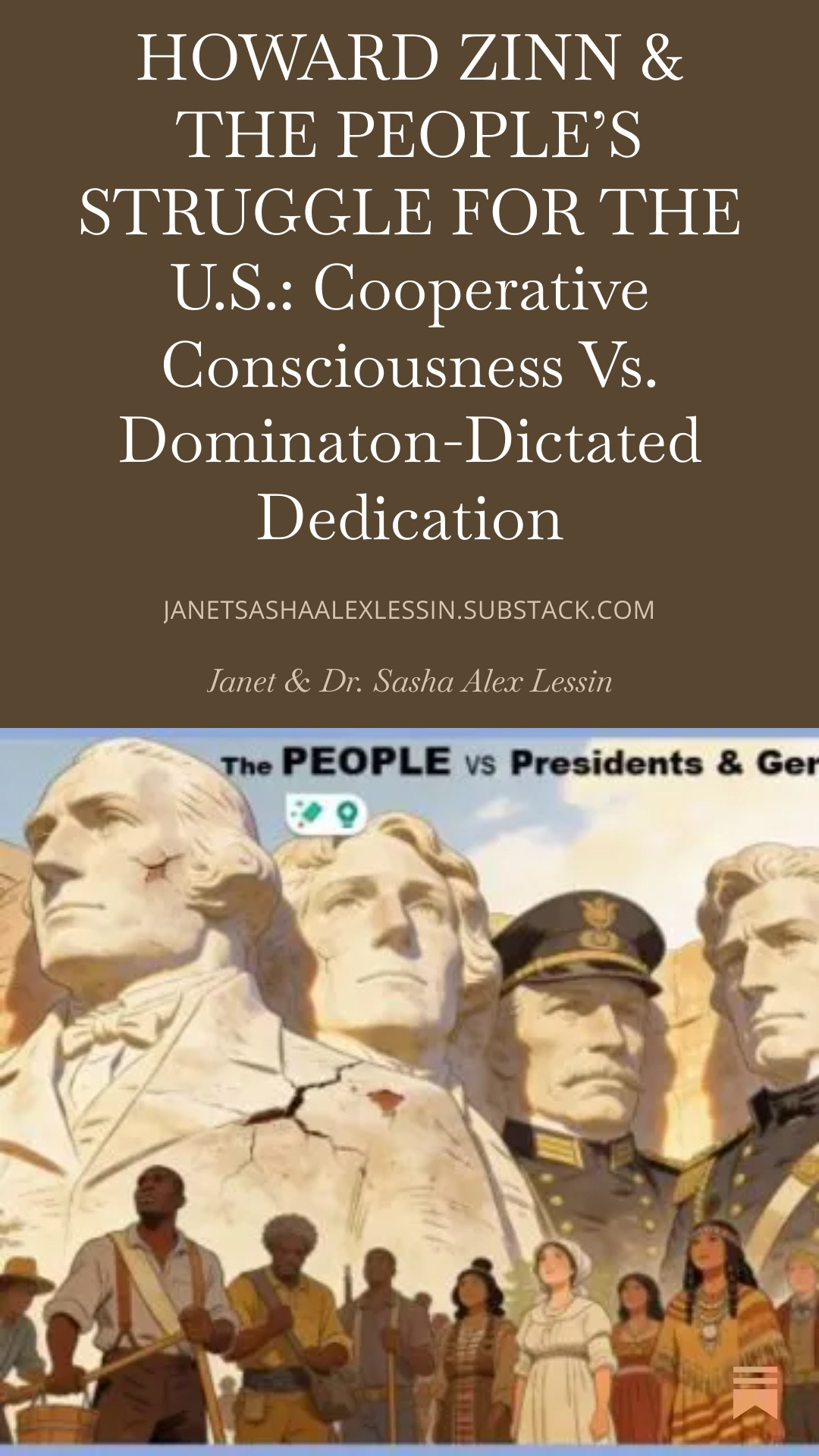
HISTORY FROM BELOW, NOT FROM THE THRONE
Howard Zinn wrote history from the ground up, not from the palaces, pulpits, or presidential podiums.

His work stood in open defiance of domination-centered history—the kind that sanctifies conquest, excuses hierarchy, and presents elite violence as destiny.
Zinn’s perspective aligned closely with what we identify here as Ninmah / Great Goddess consciousness: life-centered, relational, egalitarian, and grounded in lived human experience. Against it stood the long tradition of Yahweh- or Marduk-styled domination consciousness, which justified hierarchy through divine sanction, nationalism, and the myth of necessary authority.
Zinn did not claim neutrality. He understood that history already leaned—overwhelmingly—in favor of kings, presidents, generals, and corporations. His work applied a counterweight.
A student reading Zinn pauses and thinks: “So this wasn’t inevitable. People resisted.”

ZINN’S AWAKENING: FROM BOMBARDIER TO PEOPLE’S HISTORIAN
Howard Zinn began adult life inside the machinery of domination. As a World War II bombardier, he dropped bombs on southern France—actions that later haunted him. That experience, he wrote, helped turn him into a lifelong pacifist.
After the war, Zinn chose teaching over power. At Spelman College, a historically Black women’s college, he encountered the living consequences of racism, segregation, and economic injustice. His students—including Alice Walker—were not abstract subjects of history; they were its agents.
When Zinn advised and supported the Student Nonviolent Coordinating Committee, he crossed a line that respectable institutions did not forgive. Though tenured, he was fired.
A colleague whispers to him in a hallway: “You knew this would cost you.”
Zinn accepted the cost. He had already chosen sides.

A PEOPLE’S HISTORY: A QUIET REVOLUTION
When A People’s History of the United States appeared in 1980, it did not shout. It shifted gravity.
Zinn described his goal as a “quiet revolution”—not overthrowing governments, but changing where readers stood when they looked at the past. He told the story of the United States from the perspective of:
-
Indigenous peoples facing annihilation
-
Enslaved Africans resisting bondage
-
Workers organizing against exploitation
-
Women challenging patriarchal exclusion
-
Soldiers questioning unjust wars
This was not a denial of presidents or wars—but a refusal to center them.
Zinn argued that traditional histories teach passivity. They imply that salvation comes from “Founding Fathers,” presidents, or heroic leaders, while ordinary people wait.
A reader thinks: “They want me to vote every four years—and stay quiet the rest of the time.”

THE MYTH OF SAVIORS AND THE SURRENDER OF HUMAN POWER
Zinn challenged what he saw as one of domination culture’s deepest myths: the idea of saviors.
In mainstream history, crises were resolved by great men:
-
Washington saved the Revolution
-
Lincoln saved the Union
-
Roosevelt saved the economy
- Trump saved us from Democrats, Brown People, Immigrants, and Vaccines
Zinn argued that this narrative trains citizens to diminish themselves. Supreme citizenship becomes voting between elite candidates, while real power—collective action, refusal, solidarity—is forgotten.
Beyond politics, the same pattern repeats. People are taught to defer to experts, celebrities, and authorities.
A factory worker mutters: “So I’m never the one who matters?”
This surrender of agency mirrors ancient domination theology: power flows downward from gods to kings to subjects. In contrast, Ninmah consciousness recognizes distributed power—life arising from relationship, not command. Maybe, ojala que, Bernie, AOC, Newsome, or Mamdani, and an aroused population can save America.

DIVIDE AND RULE: HOW THE 99% ARE TURNED AGAINST EACH OTHER
Zinn exposed the genius—and cruelty—of the American control system. In a nation rich enough to provide for all, inequality persists because elites distribute just enough to fragment resistance.
He described how the 99% are pitted against one another:
-
White against Black
-
Native-born against immigrant
-
Skilled against unskilled
-
Property owners against the propertyless
Meanwhile, 1% own a third of the wealth.
A woman listening to the news sighs: “Why are we fighting each other again?”
This strategy echoes ancient imperial practice—turning tribes against tribes while empire consolidates power. Zinn insisted that recognizing shared interest was the first act of liberation.

REBELLION IS A HUMAN CONSTANT
Despite relentless control, Zinn documented something domination histories erase: people always resist.
Tenant uprisings. Slave revolts. Abolitionism. Feminism. Indigenous resistance. Labor movements. Civil rights. Antiwar protests.
Each was declared defeated. Each returned.
Zinn did not romanticize rebellion. He acknowledged betrayal, co-optation, and failure. Yet he insisted on remembering resistance because it reveals something essential: human beings do not naturally accept domination.
A young protester thinks: “They rose before us. We’re not alone.”
This recurring refusal aligns with partnership consciousness—life pressing back against imposed hierarchy.

WAR, NATIONALISM, AND SACRED VIOLENCE
Zinn was uncompromising about war. Having participated in it, he rejected the claim that modern wars are fought for freedom or defense. He described war as the ultimate tool of elite unity-manufacturing—redirecting anger outward while consolidating control at home.
Nationalism, flags, and “security” rhetoric functioned like ancient divine mandates.
A soldier writes home: “I don’t know who this is really for.”
This is domination theology in secular form: sacrifice demanded, obedience praised, dissent labeled betrayal.
ZINN STILL MATTERS
Zinn insisted that uncovering people’s history is not nostalgia—it is preparation. Knowing that ordinary people have always resisted makes future resistance imaginable.
He warned against despair as much as naïveté. Elites still rule. Movements still fracture. Yet the impulse toward dignity persists.
A reader closes the book and thinks: “So history isn’t finished.”
That recognition—quiet, grounded, human—is the heart of Ninmah consciousness.

REFERENCES
Zinn, Howard. A People’s History of the United States. Harper & Row, 1980; revised editions.
Pacifica Radio Archives. Howard Zinn Speeches and Readings.
Zinn, Howard. You Can’t Be Neutral on a Moving Train. Beacon Press.
Howard Zinn interviewed by Amy Goodman (Democracy Now!) – shortly before his death
A reflective, humane conversation on resistance, hope, and historical memory.
#HowardZinn #APeoplesHistory #PeoplesHistory #ClassStruggle #GrassrootsMovements #PartnershipConsciousness #DominationConsciousness #Ninmah #GreatGoddess #Marduk #Yahweh #AntiwarMovement #LaborHistory #CivilRights #SocialJustice #PeoplePower #ResistanceHistory #AmericanEmpire