
From Oslo to Gaza — Diplomacy Collapses, Networks Advance
By Sasha Alex Lessin, Ph.D. (Anthropology, UCLA)
The Oslo Accords opened a path to peace between Israel and Iran, but Iran chose proxy war instead. The Accords created a framework for Palestinian self-rule through negotiation with the Palestinian Authority. For a moment, diplomacy appeared to offer a way to peace. But Iran, emerging from the Iran–Iraq War, had already decided to avoid any direct wars and instead built influence through terrorist networks, starting with Hamas.
Hamas was not created by Iran. It arose inside Palestine during the First Intifada. But once the PLO entered negotiations with Israel, Iran increasingly treated Hamas as the more useful force—militant, uncompromising, and positioned outside the Oslo framework. Hamas, though Sunni in origin, became a key partner in Iran’s Shiite-led regional network—not through shared theology, but through shared enemies and converging strategic aims. Over the next fourteen years, that alignment helped transform Gaza from a testing ground for negotiated peace into a separate political and military arena.
1987–1993: HAMAS EMERGED FROM THE FIRST INTIFADA

The First Intifada was a Palestinian uprising against Israeli occupation of the West Bank and Gaza Strip, beginning in 1987 and lasting until the signing of the Oslo Accords in 1993. The uprising was initially driven by youth protests, civil disobedience, and grassroots mobilization. It evolved into organized resistance led by factions such as Hamas and the PLO. The Israeli response involved military crackdowns, curfews, and administrative detentions. Over 1,000 Palestinians and around 200 Israelis were killed. It altered international perception of the conflict and led to the recognition of the Palestinian Liberation Organization (PLO) as a negotiating entity, setting the stage for the 1993 Oslo Accords.
ISRAELI OPPRESSION TRIGGERED PALESTINIAN RIOTS (INTIFADAS)
Twenty years of Israeli military occupation after the 1967 Six-Day War left the West Bank, East Jerusalem, and Gaza Strip under Israeli control, where Palestinians lived under martial law with restricted movement, land expropriations, home demolitions, and frequent arrests. By 1987, over 1.5 million Palestinians lived in the occupied territories. The Israeli settler population grew to 60,000 in the West Bank and Gaza. Palestinians suffered high unemployment, poor infrastructure, and limited access to farmland and water. Many Palestinians worked as day laborers in Israel with no job security.
The spark that ignited the Intifada was an Israeli military vehicle crashing and killing four Palestinians. Palestinians spread the rumor that the Israelis deliberately rammed the Palestinians. Israel forced the Palestine AUTHORITY (PA) to govern from exile and instead, organized itself into student unions, local charities, religious factions, and neighborhood committees.
In December, 1987, a spin-off of the Egyptian Muslim Brotherhood criticized the secular PA and called for armed resistance in reaction to the deadly vehicle crash.
Unlike the PA, Hamas was Islamist rather than secular nationalist, rooted in mosques and social networks, and adamant that Palestinians must reject permanent peace with Israel.
When an existing leadership loses legitimacy, new movements arise from below — often more ideological and more absolute–and in Israeli-occupied Palestine, Hamas was that movement. The Iran-Hamas cooperation worked because the two had Israel and the U.S. as their shared enemies. Hamas and Iran set their sectarian differences aside to pose their common enemies.
1988–1995: THE PA CHOSE DIPLOMACY — IRAN REJECTED IT

1993–2000: IRAN BUILT RELATIONSHIPS WITH HAMAS
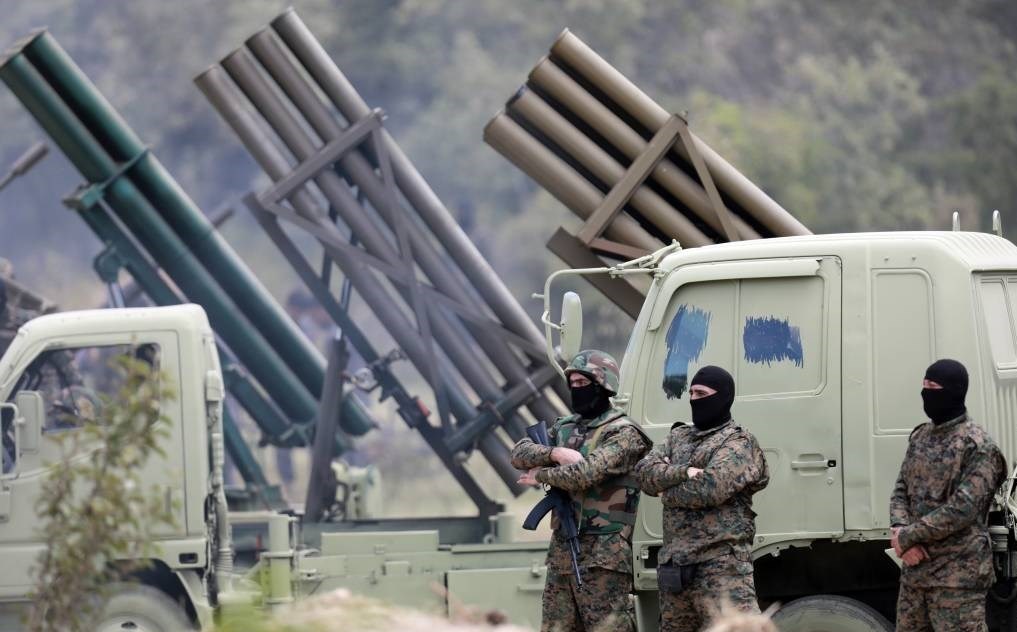
Iran provided funding, training, and weapons support, Hezbollah acted as a model and intermediary, and Hamas expanded its military and political reach into Palestine and harassed Israel without triggering a direct Iran vs Israel war.
2000–2002: THE SECOND INTIFADA INTENSIFIED ISRAEL-PALESTINIAN VIOLENCE SECOND INTIFADA & THE COLLAPSE OF TRUST OF THE OSLOW ACCORDS

2002: ISRAELIS INTERCEPTED PA’S KARINE-A ARMS SMUGGLING SHIP THAT ENDED PA-ISRAELI TRUST
Israeli forces intercepted a ship carrying weapons. Israel and the U.S. linked it to Iran and Palestinian actors (some journalists questioned whether evidence fully proved direct top-level involvement).


The Palestinian arena became connected to broader regional supply and support networks, and the Iranian model of pressuring Israel developed from a localized territorial dispute into a networked, multi-front pressure system. The dominators on both the Israeli and Iranian side concluded that Peace was temporary, and that power must be built continuously, seen or unseen. The voices in Israel that called for peace concluded that without trust, even legal treaty agreements could not bring peace. By 2002, with the seizure of the Karine A arms, the Oslo framework effectively collapsed—replaced by a shadow system of networks, proxies, and escalating distrust.
2004–2006: HAMAS PREVAILED IN GAZA
In 2004, Arafat died, perhaps murdered. Israel withdrew from Gaza in 2005 and in 2006, Hamas won the Palestinian elections; Hamas was no longer just a militant group, it became a governing force. Iran, as you can see in the picture below, increased support to Hamas.


In 2007, violent clashes between Hamas and the Palestinian Authority led to Hamas control of Gaza and the P.A.’s control (sort of) on the West Bank. The arrangement meant an end to unified Arab leadership in the Palestinian territories and to the Oslo Accords’ territorial vision. Hamas emerged from social breakdown and failed leadership legitimacy, not foreign invention. Oslo structured inequality rather than resolving it, and proxy warfare between the feuding PA and Hamas in the Gaza area. Iran had neither conquered Palestine nor created Hamas. But Iran had, despite the Oslo Accords, supported a hostile movement in areas Israel had conquered. Iran had sustained the fight against Israel with money, training, and alignment, and helped Hamas survive long enough to become a governing power. Gaza became a forward node in Iran’s network strategy that shifted the war between the Israelis and Palestinians to a war between two networks, the Iranian network vs the Israeli-American network.
#IranTimeline #Hamas #Gaza2007 #OsloAccords #MiddleEastHistory #ProxyWar #IRGC #Hezbollah #Geopolitics #Palestine #Fatah #SecondIntifada #KarineA #AxisOfResistance #EnkiSpeaks #SashaAlexLessinPhD
VIDEOS
Please share this post; may peace and cooperation prevail in the Middle East


