

By Sasha Alex Lessin, Ph.D. (Anthropology, UCLA)
1921–1925: REZA KHAN — SEIZED POWER, BEGAN PAHLAVI STATE

Reza Khan rose through the ranks of the military to seize Iran. His reforms subordinated the Muslim clerics’ authority to the Caliph’s. He banned veil-wearing and promoted secular, rather than Muslim, education. He forced Iran to become an industrial state with modern roads and railways. Reza indoctrinated his son, Mohammad, into believing that the regal authority of the Persian Caliph came to him as an inheritance, that his lineage entitled him to rule.
1941: REZA SHAH DEPOSED — ALLIED POWERS INSTALLED MOHAMMAD REZA PAHLAVI
In August–September 1941, British and Soviet forces invaded Iran to secure wartime supply routes and eliminate perceived German influence. Reza had allowed German engineers, advisors, and businesses into Iran and tried to balance British and Soviet influence by leaning toward Germany. To the Allies, especially Britain, this looked like a potential Axis foothold inside Iran. So even though Iran declared neutrality, the Allies did not trust it, and they needed Iran as a secure supply line to funnel weapons and aid to the Soviet Union fighting Nazi Germany. British forces invaded Iran from the south while Soviet troops entered from the north. Within weeks, Iran’s military collapsed under pressure.
Reza Shah had spent the 1920s–30s reducing British influence, centralizing Iranian power, and building a strong nationalist Iran. From the Allied perspective, Reza was too independent to control during wartime. In September 1941, the Brits forced Reza to abdicate and go into exile, first to Mauritius, then to South Africa, where he died in 1944.
The Allies installed Reza’s 21-year-old son, Mohammad, as Shah, but retained control over Iran and its logistics. Mohammad’s rule depended upon them.
1951–1953: OIL NATIONALIZATION — MOSSADEGH CHALLENGED FOREIGN CONTROL


Britain responded with economic warfare—a global embargo on Iranian oil, freezing of assets, and covert planning to remove him. Iran’s economy began to strain under the pressure. The British, a world leader in domination consciousness, told their operatives: Control the resource, control the nation. The voice of the people responded with the idea, A nation must own the wealth beneath its soil.
1953: OPERATION AJAX — CIA/MI6 COUP REMOVED MOSSADEGH
British intelligence (MI6) and the American Central Intelligence Agency executed Operation Ajax, a covert coup to overthrow Mossadegh. The American and British tactics in Iran included paid street mobs to create chaos, propaganda campaigns painting Mossadegh as unstable. bribery of politicians, military officers, and clerics, and direct coordination with royalist forces (see below).


The young Shah, MOHAMMAD Reza Pahlavi, who had briefly fled the country during the crisis, was restored to full power—this time not as a constitutional monarch, but as a ruler backed decisively by foreign intelligence and military influence.
This was the turning point. From here forward, the Shah’s rule would be inseparable from foreign backing—and increasingly from internal repression.
1953–1963: THE WESTERN IMPERIALISTS MADE MOHAMMAD SHAH & HELPED HIM CONSOLIDATE ABSOLUTE POWER

After the coup, Mohammad Reza Pahlavi moved to eliminate opposition and centralize authority. He launched sweeping modernization programs, culminating in the White Revolution of 1963, during which he redistributed land to undermine the traditional Iranian elites, expanded education and literacy campaigns, granted women the right to vote, and fostered industrial expansion and infrastructure development. On the surface, Iran appeared to be rapidly modernizing—urbanizing, industrializing, and aligning with Western models, but beneath this, he banned or controled political parties, and monitored were monitored and suppressed Mohammadan clerks’ authority and power. He threatened would-be dissenters. The Shah was no longer balancing factions. He was imposing a singular vision of state power.

1957–1979: SAVAK — THE SHAH’S ENFORCEMENT MACHINE
To secure his rule, the Shah created the feared secret police, the SAVAK (Sazeman-e Ettela’at va Amniyat-e Keshvar) in 1957, with assistance from the CIA and Israeli intelligence. SAVAK became synonymous with state terror. The Savak’s methods included arbitrary arrests without trial. surveillance of intellectuals, clerics, students, torture (electric shock, beatings, psychological coercion, forced confessions, and disappearances. Even mild criticism of the regime could trigger an investigation. But his results created a climate of fear across Iranian society, and underground opposition networks that let Ayatollah Ruhollah Khomeini gain influence as the voice of resistance. The Shah’s lackeys said Security requires silence. But the Iranian people whispered, “We cannot breathe in fear.”


1963–1978: PRESSURE BUILT AS THE SHAH IMPOSED MODERNIZATION WITHOUT LEGITIMACY
The Shah’s Iran became a paradox. Oil wealth surged after the 1973 oil boom. Iran’s military expansion made it a regional power. Iran’s Western alliances deepened, its wealth concentrated among elites. The Shah displaced and marginalized the nation’s rural populations. His secularization alienated Iran’s religious networks. But he continued to escalate secularization and political repression.
Khomeini, exiled in 1964, continued broadcasting opposition from abroad, framing the Shah as a puppet of foreign powers, an enemy of Islamic authority, and a tyrant ruling without legitimacy. By the late 1970s, Iran’s religious networks. Leftist groups, Nationalists, and disaffected middle classes converged and jointly challenged the Shah.
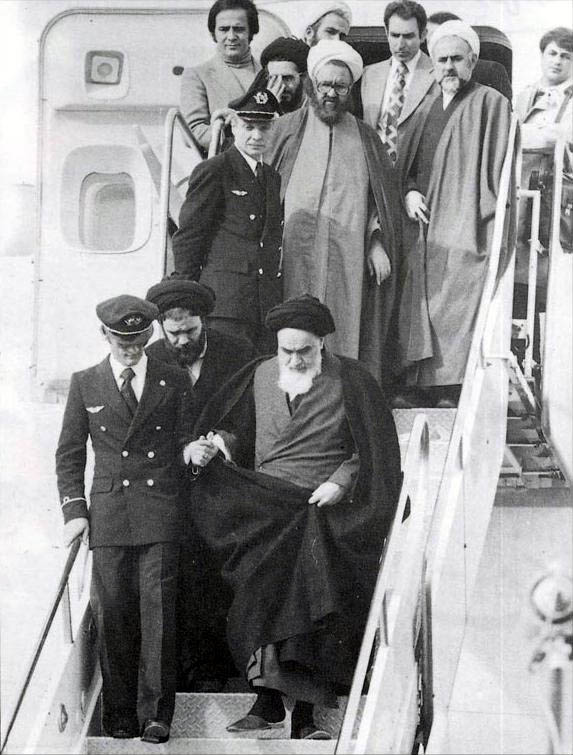
1978–1979: THE PALHAVI MONARCHY COLLAPSED
Mass protests erupted across Iran in 1978.
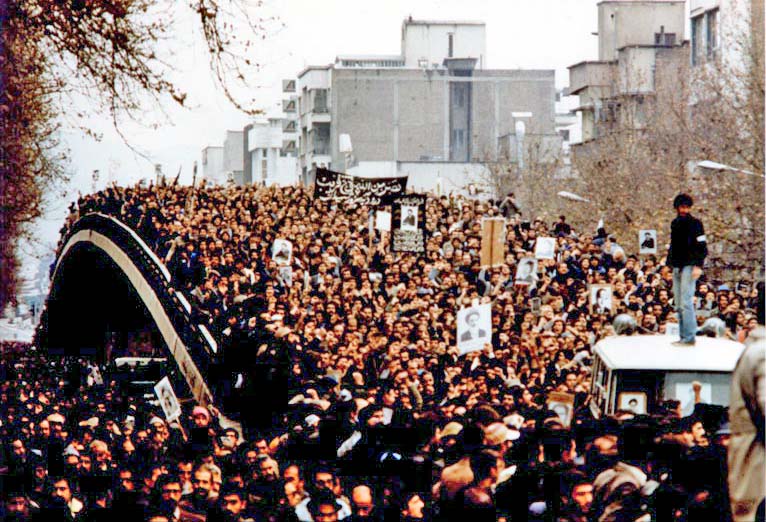
Strikes shut down the oil industry, and millions of Iranian protesters filled the streets. Security forces struggled unsuccessfully to contain the unrest.

The Shah, increasingly isolated and ill, lost control. In January 1979, he fled Iran.

In February 1979, Ruhollah Khomeini returned to Tehran, the monarchy collapsed, SAVAK was dismantled, and a new Islamic Republic emerged.
THE PATTERN
This sequence is not random. It forms a clear structural chain:
- Resource Control (Oil) → Foreign domination pressure
- National Assertion (Mossadegh) → Removed by covert intervention
- Restored Authority (Shah) → Backed externally
- Internal Enforcement (SAVAK) → Maintains control through fear
- Social Fracture → Builds beneath surface modernization
- System Collapse (1979) → Replacement by a new ideological order
What began as a struggle over oil sovereignty became a total restructuring of Iranian power. Top-down modernization + coercion + suspicion of clergy. Mohammad Shah was engineered, not self-made. Reza Shah, his father, chose Mohammad Shah’s education (Swiss elite schooling), controlled his relationships and marriage, and dominated his psychological world. Mohammad Shah inherited power without having fought for it. They both were programmed with the Anunnaki Dominator imprint in which Authority confers control, distance, and command with no organic bond with society. The son inherits the system (a centralized monarchy; a top-down force), but not the father’s internal authority. This creates a structural instability at the core of the regime.
REFERENCES
“1979 Iranian Revolution, Explained | Last Persian Shah” (Timeline – World History Documentaries)
#IranTimeline #PahlaviDynasty #RezaShah #MohammadRezaShah #IranRevolution1979 #Khomeini #CIA1953 #WhiteRevolution #SAVAK #SashaAlexLessinPhD
Watch for the oil nationalization trigger, CIA + MI6 coordination, street manipulation (paid mobs, propaganda), the Shah fleeing, then returning, and the loss of Iranian sovereignty.
This video connects oil → coup → Shah → 1979; it shows how the system evolves into collapse. In this film, we see oil as the central driver of power, why the West intervened, how the Shah’s restored rule reshaped Iran and the seeds of revolt.

Stay tuned to this site for the next episode on the Hell that followed for the Iranians.

